

The Boston to NYC bus is the cheapest seat on the Northeast Corridor — and on a good day it is also one of the most pleasant. About 190 miles door to door, roughly four and a half hours in the seat, dozens of daily departures from Boston’s South Station, and fares that can drop below the price of a Manhattan lunch when you book early. This guide covers who actually runs the Boston to NYC bus corridor in 2026, what the ride feels like, the honest bus-vs-train math, and the booking habits that separate the $20 tickets from the $60 ones.
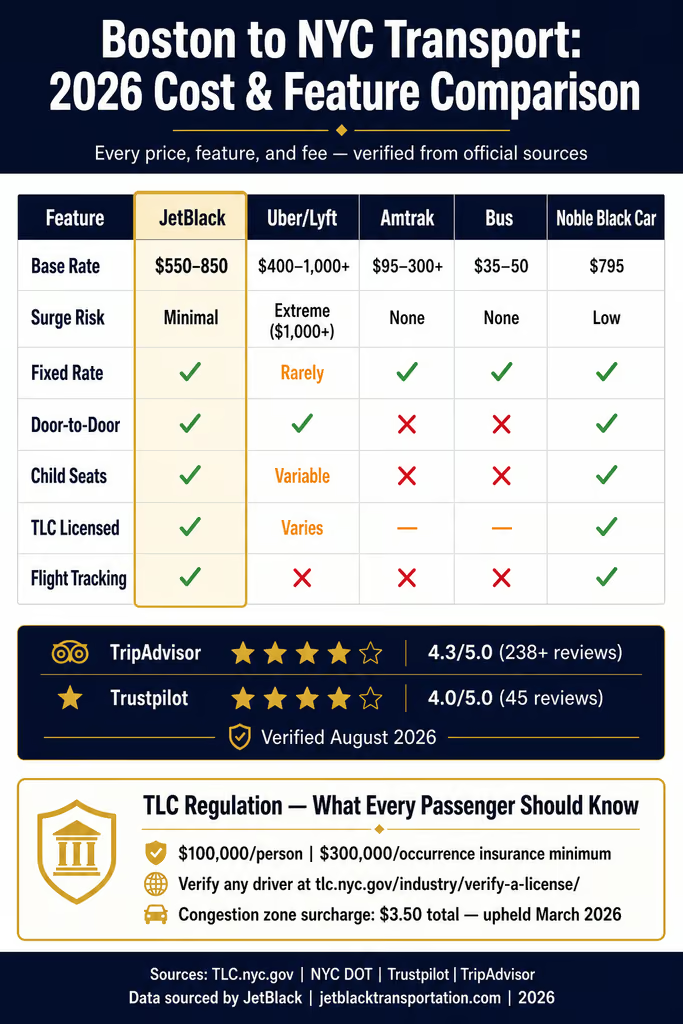
Two things to know before the details: almost every bus on this corridor now books through an app, and the cheapest fares go to the travelers who buy days ahead. Walk-up tickets exist, but you will pay for the spontaneity.
Who actually runs the Boston to NYC bus corridor
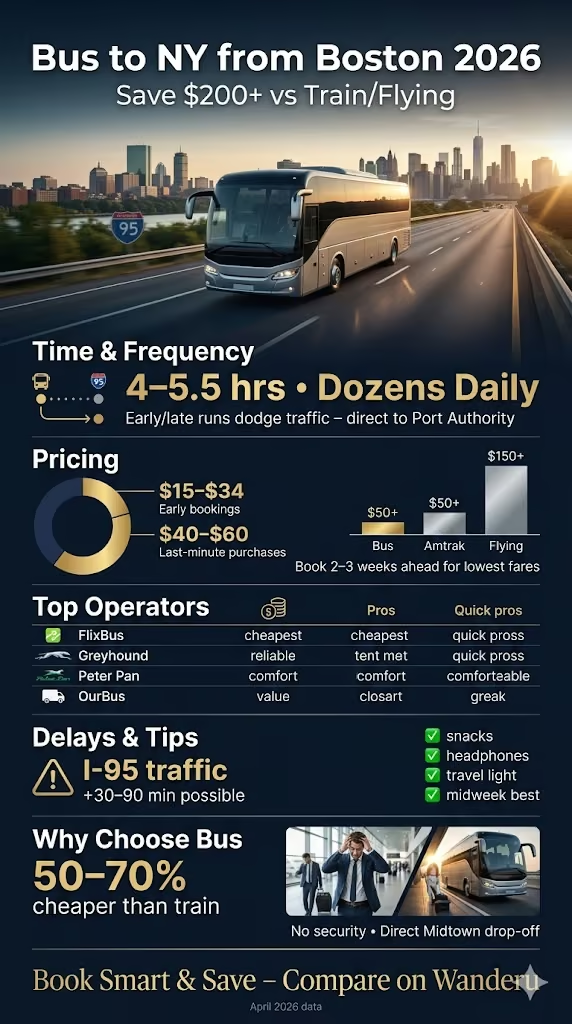
The Boston to NYC bus market has consolidated more than most travelers realize. FlixBus — the European operator that bought Greyhound — now runs dozens of daily departures between Greater Boston and New York under FlixBus, Greyhound, and Lucky Star branding, with the first buses leaving around 7 a.m. and the last after 1 a.m. Megabus runs about eight trips a day in each direction, some of them operated by Peter Pan Bus Lines, the New England carrier that has worked this corridor for generations. Around them orbit the budget specialists: Coach Run and OurBus with fares from the low twenties, and GO Buses running from Cambridge’s Alewife station and Newton’s Riverside stop for the suburbs crowd.
On the Boston end, nearly everything departs from the South Station Bus Terminal — the one address to remember. In New York, arrivals scatter: the Port Authority Bus Terminal in Midtown, curbside stops around 31st Street and 8th Avenue, the George Washington Bridge bus station, and the Chinatown curbside stops for the Lucky Star-branded runs. Your arrival point matters more than most travelers think: a Port Authority arrival puts you on the subway in two minutes, while a Chinatown drop can add 30 minutes to reach the Upper West Side. Check the arrival address on your ticket, not just the city.
What the ride feels like: Wi-Fi, outlets, and the I-95 gauntlet
A modern coach on the Boston to NYC bus run is a comfortable place to spend four-plus hours: reclining seats, onboard Wi-Fi, power outlets at most seats, and a rest stop roughly midway. Set expectations on the Wi-Fi — it works for email and messaging, it does not work for video calls, and it degrades exactly when the bus hits the cell-tower dead zones along I-95 in Connecticut. Download what you need before South Station.
The schedule says four hours and ten minutes to five and a half hours depending on the operator and the traffic, and the spread is almost entirely the last 40 miles. The bus makes good time down I-90 and I-84; it is the approach into New York — the Cross Bronx, the George Washington Bridge, the crawl down the West Side — where the schedule goes to die. An 8 a.m. departure that should arrive at 12:30 can roll in at 1:45 without anything going wrong. If you are connecting to something with a fixed time in New York, take the bus one departure earlier than the math suggests.
Boston to NYC bus vs. Amtrak: the honest math
The train is the bus’s only real competitor, and the comparison is cleaner than the marketing suggests. Amtrak’s Northeast Regional and Acela cover Boston to New York in about three hours and forty-five minutes to four hours, reliably, with real legroom and a cafe car. The catch is the fare: walk-up Amtrak tickets on this corridor routinely run $75 to $150, and Acela higher — while the bus averages around $40 and bottoms out near $20 for advance bookings.
So the honest math: the bus wins on price by a factor of two to three, the train wins on time by about an hour and on schedule reliability by more. Business travelers expensing the trip take the train. Students, budget travelers, and anyone whose schedule has slack take the bus and pocket the difference. There is no wrong answer, only a wrong assumption — usually the assumption that the $25 bus and the $120 train are selling the same trip. They are selling different trips that happen to share endpoints. Our Philadelphia-to-NYC bus guide runs the same comparison for the corridor’s southern half.
Booking tips that save real money on the Boston to NYC bus
The fare spread on a single Boston to NYC bus departure can be three-to-one between the first ticket sold and the last, which makes booking behavior the whole game. Buy as early as you can — the cheapest buckets sell first, and prices climb as the travel date approaches. Midweek departures run cheaper than Friday afternoons and Sunday evenings, when half of New England seems to be heading for Manhattan. If your dates flex by a day, check both; the savings on a Tuesday can cover dinner in the city.
A few practical notes: read the luggage policy before you pack — most operators allow one checked bag plus a carry-on, and oversized or extra bags cost extra at the curb. Refund and change policies vary by operator and by fare bucket, so the cheapest ticket is usually the least flexible one; if your plans might move, the mid-tier fare is often the better buy. And screenshot your ticket — South Station’s bus terminal has cellular dead spots, and the driver cannot scan a ticket your phone cannot load.
Groups: when the Boston to NYC bus stops being the answer
The scheduled bus is a per-person product, which means its economics invert for groups. Ten people at $40 a head is $400 and ten separate seats on someone else’s schedule, with no control over departure time and no room for the team to sit together unless you book early and board first. For corporate groups, wedding parties, sports teams, and school trips, a chartered coach is usually the better trip at a comparable or lower per-person cost — with your own departure time, your own route, and door-to-door pickup on both ends.
JetBlack runs group buses in 24, 34, and 56-passenger configurations for exactly this kind of long-distance charter, and pricing is by custom quote — the trip, the date, and the vehicle determine the number, so ask for it in writing. For smaller groups, the per-vehicle charter math is worth running against ten individual bus tickets before you default to the scheduled run. Our charter cost guide explains how group pricing is structured.
FAQs: Boston to NYC Bus
How long is the Boston to NYC bus ride?
Scheduled at 4 hours 10 minutes to 5 hours 30 minutes depending on the operator; plan on the high end if any part of the trip touches New York-area rush hour. The average across operators lands around four and a half hours.
How much does the Boston to NYC bus cost?
Advance fares start in the high teens to low twenties on the budget operators and average around $40 across the corridor; walk-up and peak-time fares run higher. Book early for the lowest buckets.
Where do Boston to NYC buses depart from?
Nearly all depart from the South Station Bus Terminal in Boston. In New York, arrivals scatter across the Port Authority Bus Terminal, Midtown curbside stops, the GW Bridge bus station, and Chinatown — check your ticket’s arrival address.
Which is the best Boston to NYC bus company?
It depends on your priority: FlixBus/Greyhound for frequency (dozens of daily departures), Peter Pan for the legacy New England operator with strong reviews, Megabus for the budget end. Compare departure times and arrival points, not just the fare.
Is the Boston to NYC bus better than Amtrak?
Cheaper by a wide margin — roughly $40 average vs. $75 to $150 for Amtrak — but about an hour slower and more vulnerable to traffic. Take the train for reliability, the bus for value.
Do Boston to NYC buses have Wi-Fi and bathrooms?
Yes — onboard Wi-Fi, power outlets, and restrooms are standard on the corridor’s coaches. The Wi-Fi handles email and messaging; do not plan on video calls.
Can I bring luggage on the bus?
Most operators allow one checked bag plus a carry-on; extra or oversized bags cost more. Check your operator’s policy before you pack.
Sources
- Corridor operators, schedules (7 a.m.–1:30 a.m.), travel times (4h10m–5h30m), and fare ranges — newenglandtravelplanner.com
- Average trip duration (4h35m), average fare (~$40), cheapest fares (from ~$13–$22), daily departures, operator ratings — busbud.com (aggregator figures; confirm current fares on operator sites before booking)
- Amtrak Boston–New York duration (~3h47m–4h) and fare range ($75–$150) — rome2rio.com (aggregator estimate)