
Arrange pet-friendly transportation by booking a car service in advance and declaring your pet on the booking — its species, number, approximate weight, and how it will ride — so the dispatcher sends a vehicle that fits the animal, its carrier, and your luggage, with the arrangement confirmed in writing before pickup. A pet you mention only at the curb is a pet the car may not fit, and a hailed taxi owes you no promise to take an ordinary pet at all.
Picture a rider landing at JFK with a 60-pound dog in a rigid crate, two suitcases, and a carry-on, heading for Brooklyn. The sedan that suits a solo traveler cannot take that load: the crate needs cargo space, the dog needs floor space, and the driver needs to know both before leaving for the airport. The arrangement below prevents that curbside scramble.
Written by David Williams · Fact-checked by Alex Freeman, Editor-in-Chief · Last verified November 2026
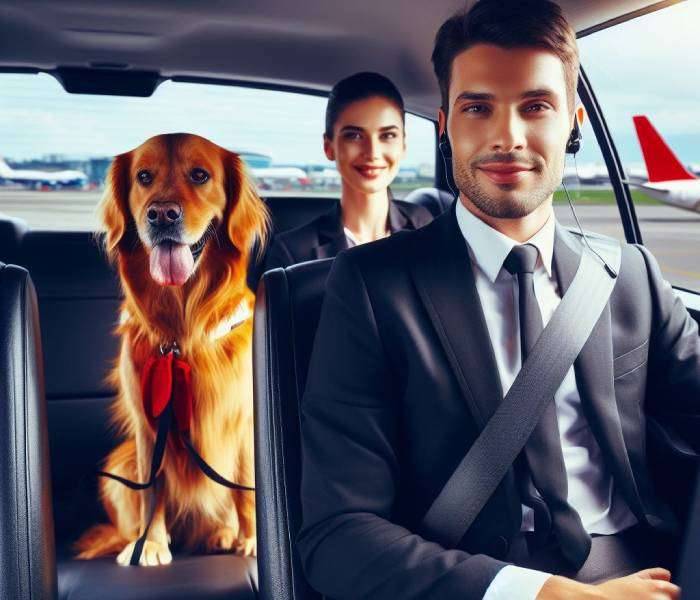
Arrange pet-friendly transportation in 7 steps
Work through the steps in order, and finish the first five before you pay anything. JetBlack’s published pet page makes the same point from the operator’s side: pets are welcome when they are part of the plan, and dispatch asks for the pet’s type and approximate weight up front, which is how a pet-friendly car service sends the right vehicle the first time.
- Name your animal’s case first: ordinary pet, trained service animal, or emotional support animal. The law and the operator treat the three differently, and the rest of the arrangement follows from which case yours is.
- Book in advance and declare the pet on the booking: species, number of animals, approximate weight, and carrier or crate size. Make a reservation for a specific time and date so the dispatcher sends a vehicle sized for the load.
- State how the pet will ride — carrier, crate, or leash or harness — and bring what you promised, with the animal secured for the whole ride.
- Match the vehicle to pet plus luggage together: give the dispatcher the crate dimensions and bag count, and size up one class when tight. You can request specific vehicle features or amenities when the standard vehicle does not fit.
- Get it in writing: vehicle class, pet named on the booking, pickup point, and whether any extra charge applies — plus a customized pick-up or drop-off location if the standard curb does not suit you.
- Confirm the flight separately if flying: airline pet and service-animal rules run under a different law, so a confirmed car says nothing about boarding the plane.
- Prepare for pickup day: relief walk, water, waste bags, ID on the pet, carrier at the door, phone on. A pet ready when the car arrives boards in minutes.
Ready to Book Your JetBlack Car Service?
What to tell the company when you book
The dispatcher can only plan around facts you give: species and type, number of animals, approximate weight, and how each animal rides, plus crate dimensions for a large rigid crate, party size, bag count, and terminal and flight number for an airport pickup. JetBlack’s published page asks for type and approximate weight because weight picks the vehicle fastest, and states that dogs, cats, and other common household pets ride across the New York City area, including JFK, LGA, and EWR — that is what catering to pet owners with pet-friendly accommodations means in practice. Several animals change the booking entirely, so say so plainly: the vehicle, the quote, and the loading time all change, and the same holds for pet-friendly accommodations from a car service generally.
Mention a service animal at booking too, though the law requires no advance notice: it lets dispatch send a vehicle with floor space for a working dog. No paperwork is ever needed for one — no certificate, vest, or ID — and for an ordinary pet the written confirmation plays that role, so ask for the pet to be named on it.
Carrier, harness, and vehicle size: how the match is made
The restraint rule comes from veterinary guidance, not from any one operator: the American Veterinary Medical Association calls loose pets in moving vehicles unsafe, and prefers a species-appropriate enclosure or a properly designed safety harness. The ASPCA’s sizing test is a crate large enough for the pet to stand or sit without touching the top, lie down, and turn around, secured against sliding, with hard-sided carriers safest. JetBlack’s policy follows the same line — carrier or leash or harness for the entire ride, no loose pets — which settles whether a specific type of car is considered pet-friendly: the restraint matters more than the vehicle, and it is not optional.
Vehicle size follows weight and bulk. JetBlack’s published guide puts a small pet in a carrier in a sedan, a medium dog in an SUV, a large dog in a full-size SUV or van, and several pets or very large breeds in a van or Sprinter — with luggage competing for the same space, so size up when in doubt, the same advice any honest pet-friendly car guide gives for an airport load. For airport runs, give the dispatcher the flying crate’s dimensions, since a rigid cargo crate needs van or SUV cargo space rather than a sedan trunk, and check restrictions on what you can bring in your cab to JFK Airport alongside your bags. On arrival, ask about meet-and-greet inside the terminal and get its price on the quote: JetBlack’s pet page mentions it without stating one. The details no published page settles — a breed restriction, a maximum carrier size, a cleaning charge if a pet soils the car — are questions for dispatch, answered in writing; this page invents none of them.
Service animals, pets, and emotional support animals are three different cases
Under the Americans with Disabilities Act, a service animal is a dog individually trained to do work or perform tasks directly related to a person’s disability — guiding a person who is blind, alerting a person who is deaf, pulling a wheelchair, detecting a seizure, or reminding a person to take medication. Any breed and size qualifies; no certification, professional training program, vest, or ID is required. The deciding line is the trained task: mere comforting presence is not enough, but a dog trained to sense an oncoming anxiety attack and act to lessen it qualifies, and a task-trained psychiatric service dog counts the same as a guide dog.
When the role is not obvious, staff may ask only two questions — is the dog a service animal required because of a disability, and what task has it been trained to perform — and may not demand documentation, an ID card, or a demonstration, or ask about the disability. Pet fees and deposits must be waived for service animals, though damage may be charged as for any customer, and the handler must keep the dog under control; removal may be asked only if the dog is out of control or not housebroken. In New York City, the TLC applies the same protection to every licensed vehicle: service animals must be welcomed in all taxicabs and for-hire vehicles on the passenger’s statement, secured or not, and refusal is a service refusal punishable up to license suspension or revocation. That protection covers service animals only: it does not settle whether a taxi service is pet-friendly for ordinary pets, and no TLC material found for this page promises a hailed cab will take one.
An emotional support animal is therefore arranged as a pet: declared, secured, vehicle-matched. Flights follow a different law — the Air Carrier Access Act, not the ADA — under which the DOT rule effective January 11, 2021 defines a service animal as a trained dog, lets airlines treat emotional support animals as pets, and lets airlines require the DOT form up to 48 hours ahead, plus a relief attestation for flights of eight hours or more. Confirm the airline’s own carrier, fee, and paperwork rules before booking the car; the ground side is pet-friendly transportation arranged as this page describes, and the flight side belongs to the airline.
Taxi, car service, rideshare, and transit: which arrangement fits
A pre-booked car service is the recommended arrangement for most pet travel here: the pet is declared, matched, and named on a written quote before the car moves, with dispatch reachable around the clock at +1-646-214-4828. JetBlack’s published page states no separate pet surcharge is published and rides are quoted at the standard vehicle rate, with special arrangements reflected in the quote. Treat that as the starting position for pet-friendly travel with style, and still ask for your own quote to name the pet and any extra charge.
A hailed taxi is fastest at the curb with a small crated pet and a willing driver: no booking, regulated meter, immediate departure. It is the weakest plan, though — no reserved vehicle, no advance confirmation, and TLC protections written for service animals, not ordinary pets. For a crate-plus-luggage airport run, the hail is a gamble.
Uber Pet allows one pet per trip — a small dog or cat, no breed or size restrictions, extras at the driver’s discretion — costs more than other options, and may add a cleaning fee for waste, hair, or damage; riders must restrain the pet, bring a seat cover, and never leave it unattended, while service animals ride any option free of extra charge without selecting Uber Pet. Lyft Pet rides add a fee, fit four people and one well-behaved animal, and run only in select markets, with service animals welcome on every Lyft ride. Both suit one small pet spontaneously; both stop at one animal and no size conversation in advance.
Transit is cheapest and strictest: the MTA requires subway and bus pets in a bag or container that does not annoy other riders, with no leash option; the Long Island Rail Road requires a lap-sized container, while Metro-North allows a kennel or a leashed pet. Service animals follow different policies. For a cat in a carrier on a short hop, the subway wins; for a large dog, several animals, or crate plus suitcases plus stairs, the container rule ends the transit option.
What to confirm before pickup
Run through this list the day before you travel, while there is still time to change the vehicle or the pickup plan. Anything unanswered is a question for dispatch, not a detail to settle at the curb.
- Pet named on the written booking with species, number, and approximate weight
- Vehicle class confirmed against the carrier or crate dimensions and the bag count
- Carrier, crate, or harness ready and sized so the pet can stand, sit, lie down, and turn around
- Pickup point agreed, including terminal and flight details for an airport pickup
- Any extra charge for the pet answered in writing on the quote, or confirmed as none
- Cleaning or damage terms for a pet mess asked about and answered before travel
- Relief walk, water, waste bags, and ID on the pet packed before the car arrives
- Airline pet or service-animal forms and carrier rules confirmed separately with the airline
If anything changes — a second pet, a bigger crate, a moved flight — tell dispatch at once: the car must match the booking. And never leave a pet unattended in the vehicle; Uber’s pet tips state it plainly, and the whole plan assumes a person stays with the animal.
Questions travelers ask
Do I have to tell the car service about my pet when I book?
Yes. Tell the company when you book: the species, the number of animals, each animal’s approximate weight, and whether it rides in a carrier, a crate, or on a harness or leash. JetBlack’s published pet page asks for the pet’s type and approximate weight at booking because weight decides which vehicle fits. A pet named on the written booking gets the right vehicle; a pet mentioned first at the curb may not fit the car that arrives.
Does my pet have to ride in a carrier?
Your pet must ride secured for the whole trip, and a carrier or crate is the safest way to do it. JetBlack’s published policy requires pets to be secured in a carrier or on a leash or harness for the entire ride, and veterinary guidance agrees that loose pets in a moving vehicle are unsafe. Size the carrier so the pet can stand, sit, lie down, and turn around, and secure it so it cannot slide. A service animal is the exception to the carrier expectation: it rides under the handler’s control, harnessed, leashed, or tethered unless that interferes with its task.
Is an emotional support animal treated the same as a service animal?
No. Under the ADA, a service animal is a dog individually trained to perform a task related to a disability, and a dog whose sole function is comfort or emotional support does not qualify. An emotional support animal is therefore arranged as an ordinary pet: declared at booking, secured in a carrier or on a harness or leash, and matched to a vehicle. Airlines follow the same split under the Air Carrier Access Act and may treat an emotional support animal as a pet. The exception is a dog trained to perform a specific psychiatric task, such as sensing an oncoming anxiety attack and acting to lessen it — that dog is a service animal, not an emotional support animal.
Do I need papers, a vest, or a registration for my service animal?
No papers, vest, or registration is required for a service animal under the ADA. Staff may ask only two questions when the dog’s role is not obvious: whether the dog is a service animal required because of a disability, and what work or task it has been trained to perform. They may not demand documentation, an ID card, or a demonstration of the task, and no vest or ID is required. Note the difference for flights: airlines may require the DOT service animal form up to 48 hours in advance, which is an airline rule under the Air Carrier Access Act, not a ground-transport requirement.
Can I take a large dog on the subway instead of booking a car?
Only if the dog fits in a bag or other container. The MTA requires pets on the subway and buses to be in a bag or container carried in a way that does not annoy other riders, with no leash option for an ordinary pet. A large dog that cannot fit a container cannot ride the subway or a bus, and the Long Island Rail Road requires a container that fits on your lap. Metro-North is the exception among the MTA railroads: a pet may ride in a kennel or container, or securely controlled on a leash. For a large dog, a pre-booked car matched to the animal’s size is the workable arrangement.
Sources
- U.S. Department of Justice, ADA.gov — Service Animals: definition, trained-task test, emotional support distinction, two permitted questions, no documentation or vest required, published July 29, 2026, accessed 2026-11-13
- U.S. Department of Justice, ADA.gov — ADA Requirements: Service Animals: handler control, removal limits, pet fees waived, damage charges, last updated February 28, 2020, accessed 2026-11-13
- NYC Taxi and Limousine Commission — Industry Notice #09-23, Service Animals Must Be Welcomed in All TLC-Licensed Vehicles, December 24, 2009, accessed 2026-11-13
- NYC Taxi and Limousine Commission — Industry Notice #10-28, Service Animals Must Be Welcomed in All TLC-Licensed Vehicles, November 29, 2010, accessed 2026-11-13
- Metropolitan Transportation Authority — Pets on MTA subways, buses, and railroads: subway and bus container rule, Long Island Rail Road lap container, Metro-North kennel or leash, accessed 2026-11-13
- Federal Transit Administration — Frequently Asked Questions: transit entities must permit service animals under 49 CFR 37.167(d), comfort animals not covered, accessed 2026-11-13
- Uber Help — Uber Pet (Pet Friendly Rides): one pet per trip, no breed or size restrictions, extra cost, cleaning fee, restraint tips, service animals ride any option, accessed 2026-11-13
- Lyft Help — Lyft ride types overview: Pet rides carry an additional fee, four people and one animal, select markets, service animals always welcome, accessed 2026-11-13
- U.S. Department of Transportation — Disability and the Air Carrier Access Act service-animal rule, effective January 11, 2021: trained-dog definition, emotional support animals as pets, DOT form up to 48 hours ahead, page last updated October 28, 2026, accessed 2026-11-13
- American Veterinary Medical Association — Safe non-commercial transport of pets in motor vehicles: loose pets unsafe, enclosure or harness preferred, accessed 2026-11-13
- ASPCA — Traveling With Pets? Follow These Expert Dos and Don’ts to Keep Them Safe: hard-sided carrier sizing, securing the crate, accessed 2026-11-13
- JetBlack Transportation — Pet Friendly Car Service NYC service page, updated October 6, 2026, accessed 2026-11-13: pets welcome, secured for the whole ride, type and weight at booking, weight-based vehicle guide, no separate pet surcharge published, airline rules separate
- JetBlack Transportation — owner-confirmed service facts, confirmed 2026-10-26, accessed 2026-11-13: 24/7 dispatch at +1-646-214-4828, written per-trip quotes agreed before travel, 34 W 34th St, New York, NY 10001
JetBlack Transportation · 34 W 34th St, New York, NY 10001 · +1-646-214-4828 · Pet arrangements verified November 2026 — confirm your quote and pet arrangement in writing before you travel
